conners scale adhd pdf
Conners Scale ADHD PDF: A Comprehensive Overview (Updated 03/24/2026)

The Conners Scale, a vital ADHD assessment tool, exists in various PDF formats for professionals; it aids in symptom reporting during diagnosis, offering comprehensive behavioral insights.
What is the Conners Scale?
The Conners Scale is a widely utilized set of questionnaires designed to assess behavioral problems in children and adolescents, with specific focus on symptoms associated with Attention-Deficit/Hyperactivity Disorder (ADHD). It’s not a diagnostic tool in isolation, but rather a crucial component within a comprehensive evaluation process. These scales gather information from multiple sources – parents, teachers, and sometimes the individuals themselves – providing a multifaceted perspective on behavior.
Essentially, it’s a standardized method for reporting ADHD symptoms. Different versions cater to varying age groups and reporting perspectives. The scales quantify behaviors like inattention, hyperactivity, impulsivity, and other related issues, aiding clinicians in understanding the nature and severity of potential challenges. Access to the scales often requires professional credentials, and PDF versions are commonly used for administration and record-keeping.
Historical Development of the Conners Scale
The Conners Scale’s origins trace back to the work of Keith Conners, a pioneering psychologist in the field of ADHD research, beginning in the 1960s. Initially developed as a tool to aid in the diagnosis of minimal brain dysfunction – a term previously used to encompass ADHD – the scale underwent significant revisions over the decades to refine its accuracy and scope.
Early iterations focused primarily on hyperactivity, but subsequent versions expanded to include assessments of inattention and other behavioral concerns. These revisions reflected evolving understandings of ADHD as a neurodevelopmental disorder with diverse presentations. The development of various versions, including the Conners-RS and Conners CBRS, aimed to address different age groups and assessment needs, solidifying its place as a cornerstone in ADHD evaluation.
Different Versions of the Conners Scale
Several iterations of the Conners Scale exist, each tailored for specific populations and assessment goals. The Conners Rating Scales – Revised (Conners-RS) is widely used for children and adolescents, providing a comprehensive evaluation of ADHD symptoms and associated behavioral problems.
The Conners Comprehensive Behavior Rating Scales (Conners CBRS) offers a broader assessment, encompassing not only ADHD but also emotional and behavioral difficulties, suitable for diverse clinical settings. Conners Adult ADHD Rating Scales (CAARS) specifically targets adults, evaluating ADHD symptoms as they manifest in adulthood, including inattentive and hyperactive-impulsive traits.
These variations ensure clinicians can select the most appropriate tool for accurate diagnosis and treatment planning.
Conners Rating Scales – Revised (Conners-RS)
The Conners-RS is a frequently utilized, norm-referenced questionnaire designed to assess ADHD and associated behavioral issues in children and adolescents. It’s completed by parents, teachers, and sometimes the child themselves, offering a multi-faceted perspective.
The scale evaluates symptoms across various domains, including inattention, hyperactivity, impulsivity, and aggressive behavior. Scoring yields T-scores, allowing for comparison to normative data and identification of clinically significant elevations. PDF versions of the Conners-RS are available for authorized users, facilitating easy administration and scoring.
It’s a valuable tool for initial screening and ongoing monitoring of treatment effectiveness.
Conners Comprehensive Behavior Rating Scales (Conners CBRS)
The Conners CBRS represents a more extensive assessment than the Conners-RS, providing a detailed evaluation of a child’s emotional, behavioral, and cognitive functioning. It’s designed for ages 3-18 and utilizes multiple rating forms – parent, teacher, and self-report (for older children).
This scale assesses a broader range of behaviors, including ADHD symptoms, oppositional defiant disorder, anxiety, depression, and social problems. PDF versions of the Conners CBRS are typically restricted to qualified professionals who have purchased the necessary licensing and materials.
Scoring provides comprehensive profiles and allows for differential diagnosis.
Conners Adult ADHD Rating Scales (CAARS)
The Conners Adult ADHD Rating Scales (CAARS) are specifically designed to assess ADHD symptoms in adults, offering both self-report and observer (significant other) forms. These scales delve into the nuances of adult ADHD presentation, recognizing that symptoms manifest differently than in childhood.
CAARS evaluates core ADHD symptoms like inattention and hyperactivity-impulsivity, alongside associated emotional and executive function difficulties. Access to the CAARS PDF is generally limited to licensed healthcare professionals who have obtained the necessary training and materials.
Scoring helps determine the presence and severity of ADHD in adults, aiding in diagnosis and treatment planning.
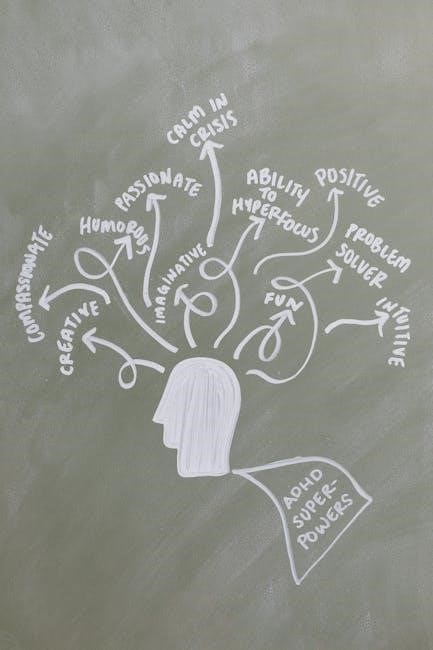
Understanding the Components of the Conners Scale
The Conners Scale assesses inattention, hyperactivity, impulsivity, and other behaviors like aggression and anxiety, providing a detailed profile of symptom presentation.
Symptom Domains Assessed
The Conners Scale meticulously evaluates several key symptom domains crucial for a comprehensive ADHD assessment. Primarily, it focuses on Inattention Symptoms, examining difficulties sustaining attention, frequent careless mistakes, and struggles with organization. Secondly, Hyperactivity/Impulsivity Symptoms are assessed, looking at excessive fidgeting, difficulty remaining seated, and interrupting others.
However, the scale extends beyond core ADHD symptoms. It also investigates Other Problem Behaviors, including measures of Aggression – assessing oppositional and defiant behaviors – and Anxiety, identifying potential co-occurring emotional difficulties. These broader assessments provide a holistic view of the individual’s behavioral profile, aiding in differential diagnosis and treatment planning. The detailed symptom breakdown allows clinicians to pinpoint specific areas of concern.
Inattention Symptoms
The Conners Scale’s assessment of Inattention Symptoms is detailed, probing various manifestations of attentional difficulties. It explores the frequency of making careless mistakes in schoolwork or other activities, indicating a lack of attention to detail. Difficulty sustaining attention in tasks or play activities is a core focus, alongside being easily distracted by extraneous stimuli.
Furthermore, the scale investigates challenges with organization – difficulties managing tasks and belongings – and avoidance of tasks requiring sustained mental effort. Frequent losing of things necessary for tasks and activities, forgetfulness in daily routines, and appearing not to listen when spoken to directly are also assessed. These indicators collectively paint a picture of the individual’s attentional capabilities.
Hyperactivity/Impulsivity Symptoms
The Conners Scale meticulously evaluates Hyperactivity and Impulsivity, key components of ADHD presentation. Hyperactivity is assessed through observable behaviors like fidgeting, squirming, and leaving one’s seat in situations where remaining seated is expected. Excessive running or climbing, even when inappropriate, and difficulty playing or engaging in leisure activities quietly are also examined.
Impulsivity is gauged by questions regarding blurting out answers before a question has been completed, difficulty waiting one’s turn, and interrupting or intruding on others. The scale explores whether the individual acts without thinking, leading to potentially risky behaviors. These assessments provide a comprehensive understanding of the individual’s activity level and self-control capabilities.
Other Problem Behaviors (Aggression, Anxiety, etc.)
Beyond core ADHD symptoms, the Conners Scale assesses co-occurring behavioral and emotional difficulties. This includes evaluating aggressive tendencies, such as arguing, fighting, or deliberately annoying others. The scale probes for defiant or hostile behaviors, providing insight into potential oppositional traits.

Anxiety is also considered, with questions addressing worry, nervousness, and fears that may impact daily functioning. The Conners Scale can identify symptoms of depression, including sadness, loss of interest, and changes in appetite or sleep. Furthermore, it explores potential conduct problems, like rule-breaking and antisocial behavior, offering a holistic view of the individual’s challenges.
Scoring and Interpretation
Conners Scale scoring transforms raw responses into standardized T-scores, facilitating objective interpretation. Raw scores, representing the number of endorsed symptoms, are converted using age- and gender-specific norms. T-scores typically range from 30 to 70, with higher scores indicating greater symptom severity.
Cut-off scores, generally around 65 or 70, suggest a potential need for further evaluation for ADHD. However, these are guidelines, and clinical judgment is crucial. Subscale scores provide detailed insights into specific symptom domains – inattention, hyperactivity/impulsivity, and other problem behaviors – allowing for a nuanced understanding of the individual’s profile. Careful interpretation considers the entire clinical picture, not solely the scale’s results.
Raw Score Conversion to T-Scores
Converting raw scores from the Conners Scale to T-scores is a fundamental step in interpretation. Raw scores, simply the sum of endorsed symptoms on each subscale, are not directly comparable across individuals due to varying response styles and age. T-scores standardize these raw scores against normative data, accounting for age and gender.
This conversion utilizes established tables or software accompanying the Conners Scale PDF. A T-score of 50 represents the average performance for that age and gender. Scores deviate from 50, with higher values indicating greater symptom expression. This standardization allows clinicians to compare an individual’s performance to a representative sample, enhancing the accuracy and objectivity of the assessment.
Cut-off Scores for ADHD Diagnosis
Establishing definitive ADHD diagnosis using Conners Scale cut-off scores requires careful consideration. While the scale provides valuable data, it’s not a standalone diagnostic tool. Generally, T-scores of 65 or higher on the Inattention or Hyperactivity/Impulsivity subscales suggest significant symptom presentation, warranting further investigation.
However, these cut-offs aren’t absolute; clinical judgment is crucial. A score slightly above the cut-off, combined with corroborating evidence from other sources (clinical interviews, behavioral observations), may be sufficient for diagnosis. Conversely, scores near the cut-off with significant functional impairment also demand attention. The Conners Scale PDF documentation provides specific guidance on interpreting scores within the context of a comprehensive evaluation.
Interpreting Subscale Scores
Analyzing Conners Scale subscale scores offers a nuanced understanding of ADHD symptom presentation. Elevated T-scores on the Inattention subscale indicate difficulties with focus, organization, and task completion. High scores on Hyperactivity/Impulsivity suggest restlessness, excessive talking, and difficulty waiting their turn.
Importantly, interpreting these scores requires considering the individual’s age and developmental stage. Significant discrepancies between subscales can also be informative – for example, high inattention but relatively low hyperactivity might suggest a primarily inattentive presentation of ADHD. The Conners Scale PDF manual details normative data and provides guidance on identifying clinically significant score patterns, aiding in a more precise assessment.

Accessing the Conners Scale PDF
Obtaining the Conners Scale PDF typically requires purchase from official sources due to copyright restrictions; free versions may lack validity or be illegal.
Official Sources for the PDF
Securing the Conners Scale PDF legitimately necessitates utilizing authorized distributors to ensure validity and adherence to copyright laws. Multi-Health Systems (MHS) is the primary official source, offering various Conners’ scales – Conners-RS, Conners CBRS, and CAARS – accessible through their website with appropriate professional credentials.
Purchasing directly from MHS guarantees access to the most current, standardized versions of the assessment tools. Other reputable psychological testing platforms and distributors may also carry the Conners scales, but verifying their accreditation is crucial. Avoid unofficial websites offering free downloads, as these often contain outdated, incomplete, or potentially compromised materials. Utilizing legitimate sources protects the integrity of the assessment process and ensures accurate diagnostic outcomes.

Legality and Copyright Considerations
The Conners Scales are protected by copyright, meaning unauthorized reproduction, distribution, or modification is strictly prohibited. Obtaining the PDF through unofficial channels constitutes a violation of these rights and carries legal ramifications. Only qualified professionals with appropriate licenses and training are legally permitted to administer and interpret these assessments.
Using illegally obtained materials compromises the validity of the assessment and potentially harms individuals undergoing evaluation. Multi-Health Systems (MHS) actively monitors and pursues copyright infringement. Proper licensing ensures access to updated norms, scoring materials, and ongoing support, vital for accurate results. Respecting copyright safeguards the integrity of the Conners Scales and upholds ethical assessment practices.
Free vs. Paid Versions & What You Get
Genuine Conners Scales are not available for free download. Any PDF claiming to be a complete, free version is likely unauthorized and potentially invalid. Paid versions, obtained directly from Multi-Health Systems (MHS), provide comprehensive assessment materials, including rating scales, scoring keys, and detailed interpretation guides.
Purchasing the scales grants access to standardized norms, ensuring accurate comparisons and reliable results. Free, unofficial versions lack these crucial elements, rendering them unsuitable for clinical use. Paid access often includes training resources and ongoing support from MHS, enhancing professional competence. Investing in the legitimate scales guarantees a valid, reliable, and ethically sound assessment process.

Using the Conners Scale in ADHD Assessment
The Conners Scale aids the diagnostic process, requiring qualified professionals for administration and interpretation alongside clinical interviews and behavioral observations for a thorough evaluation.
Role in the Diagnostic Process
The Conners Scale doesn’t independently diagnose ADHD; it’s a crucial component within a comprehensive evaluation. It provides standardized, quantifiable data regarding ADHD-related symptoms, offering valuable insights into a patient’s behavioral patterns. Professionals utilize the scale’s results to support—or refute—initial observations and information gathered from other sources, like parent or teacher reports.
Its structured format helps identify symptom clusters associated with inattention, hyperactivity, and impulsivity, aligning with diagnostic criteria outlined in manuals like the DSM-5. However, a diagnosis necessitates a holistic approach, integrating the Conners Scale data with clinical interviews, behavioral observations, and potentially neuropsychological testing. The scale serves as a valuable tool, but clinical judgment remains paramount in determining an accurate ADHD diagnosis.
Who Can Administer the Scale?
The Conners Scale administration isn’t open to the general public; it requires qualified professionals with expertise in psychological assessment. Typically, licensed psychologists, psychiatrists, neuropsychologists, and other appropriately trained healthcare providers are authorized to administer and interpret the scale. This restriction ensures accurate data collection and responsible interpretation of results, preventing misdiagnosis or inappropriate interventions.
Proper training is essential to understand the nuances of the scale, including scoring procedures, normative data, and potential limitations. While parents or teachers may complete rating scales, they shouldn’t independently interpret the results. Only qualified professionals can synthesize the Conners Scale data with other clinical information to form a comprehensive assessment and diagnostic impression.
Combining the Conners Scale with Other Assessments
The Conners Scale is most effective when integrated with a broader assessment approach, rather than used in isolation. Clinical interviews provide crucial contextual information about the individual’s history, symptoms, and functional impairment, enriching the quantitative data from the scale. Behavioral observations, conducted in natural settings like classrooms or homes, offer real-time insights into attention and behavior.
Furthermore, neuropsychological testing can assess cognitive functions like working memory and executive function, often impaired in ADHD. Combining these methods provides a comprehensive profile, strengthening diagnostic accuracy and informing treatment planning. Relying solely on the Conners Scale risks overlooking co-occurring conditions or misinterpreting symptoms; a multi-faceted evaluation is paramount.
Clinical Interviews
Clinical interviews are a cornerstone of ADHD assessment, complementing the Conners Scale’s standardized data. These interviews allow clinicians to gather detailed developmental history, exploring symptom onset, severity, and impact across various life domains – home, school, and social settings. A thorough interview uncovers contextual factors influencing behavior, differentiating ADHD from other potential causes like anxiety or trauma.
Directly questioning the individual (when appropriate) and informants – parents, teachers, or partners – provides diverse perspectives. The clinician can probe specific behaviors identified on the Conners Scale, seeking clarifying examples and assessing functional impairment. This qualitative data enriches the quantitative findings, leading to a more nuanced and accurate understanding of the individual’s presentation.
Behavioral Observations

Behavioral observations offer invaluable, real-time data supplementing the Conners Scale’s retrospective reports. Observing the individual in natural settings – classroom, home, or clinic – allows clinicians to directly witness behaviors indicative of ADHD, such as inattention, hyperactivity, and impulsivity. These observations bypass potential recall bias or reporting distortions present in self or parent-report measures.
Structured observation protocols can enhance objectivity, focusing on specific target behaviors and recording their frequency and duration. Observing interactions with peers and adults provides insights into social functioning and emotional regulation. These direct observations validate findings from the Conners Scale and contribute to a comprehensive understanding of the individual’s behavioral profile, aiding in accurate diagnosis and treatment planning.
Neuropsychological Testing
Neuropsychological testing provides objective data regarding cognitive functions often impacted in ADHD, complementing the Conners Scale’s behavioral assessments. These tests evaluate attention, executive functions (planning, organization, working memory), processing speed, and impulsivity. Results can identify specific cognitive strengths and weaknesses, differentiating ADHD from other conditions with overlapping symptoms.
Tests like the Continuous Performance Test (CPT) directly assess sustained attention and impulsivity, while measures of working memory and executive function reveal difficulties with organization and planning. Neuropsychological findings help clarify the neurocognitive profile, informing targeted interventions and educational accommodations. Integrating these results with Conners Scale data creates a robust and comprehensive assessment, supporting accurate diagnosis and personalized treatment strategies.

Limitations and Considerations
While valuable, the Conners Scale isn’t definitive; false positives/negatives can occur. Cultural factors and comprehensive evaluations are crucial for accurate ADHD assessment.
Potential for False Positives/Negatives
The Conners Scale, like all assessment tools, isn’t foolproof and carries the risk of inaccurate results. A false positive indicates the scale suggests ADHD when it isn’t present, potentially leading to unnecessary interventions and labeling. Conversely, a false negative occurs when the scale fails to identify ADHD in an individual who genuinely has it, delaying appropriate support and treatment.
Several factors contribute to these inaccuracies. Subjectivity in responses from parents, teachers, or the individual themselves can influence scores. Additionally, co-occurring conditions – anxiety, depression, or learning disabilities – can mimic ADHD symptoms, skewing the results. Therefore, relying solely on the Conners Scale for diagnosis is strongly discouraged; it must be integrated with other comprehensive assessment methods for a reliable conclusion.
Cultural and Linguistic Considerations
When utilizing the Conners Scale, particularly its PDF versions, awareness of cultural and linguistic nuances is paramount. The scale was originally developed within a specific cultural context, and direct application to diverse populations may yield inaccurate results. Behavioral manifestations of ADHD can vary across cultures; what’s considered inattentive in one culture might be normative behavior in another.
Furthermore, language barriers can significantly impact the validity of responses. Translation issues or differing interpretations of questions can lead to misrepresentation of symptoms. It’s crucial to employ culturally sensitive assessment practices, potentially utilizing qualified interpreters or adapting the scale for specific linguistic groups. A comprehensive evaluation should always consider the individual’s cultural background and language proficiency to ensure accurate diagnosis and appropriate intervention.
The Importance of a Comprehensive Evaluation
Relying solely on the Conners Scale PDF, or any single assessment tool, is insufficient for an accurate ADHD diagnosis. A comprehensive evaluation necessitates a multi-faceted approach, integrating information from various sources. This includes detailed clinical interviews with the individual and their caregivers, gathering developmental history, and observing behavior across different settings.
The Conners Scale provides valuable quantitative data, but it should be interpreted within the broader clinical picture. Ruling out other potential causes for the observed symptoms, such as anxiety, depression, or learning disabilities, is essential. A thorough assessment ensures a nuanced understanding of the individual’s strengths and challenges, leading to a more informed and effective treatment plan.

Conners Scale vs. Other ADHD Rating Scales
Comparing the Conners Scale PDF to Vanderbilt, ADHD-RS-IV, and Brown Scales reveals differing focuses; each tool assesses ADHD symptoms with unique strengths and weaknesses.
Vanderbilt ADHD Diagnostic Rating Scale
The Vanderbilt ADHD Diagnostic Rating Scale is a widely utilized, multi-faceted tool frequently compared to the Conners Scale. Available as a PDF, it’s designed for comprehensive ADHD assessment in children and adolescents, often employed by pediatricians and school psychologists. Unlike some scales focusing solely on ADHD, the Vanderbilt incorporates assessments for associated emotional and behavioral problems like anxiety, depression, and conduct disorder.
It exists in both parent and teacher report forms, providing a broader perspective on the child’s behavior across different settings. Scoring is relatively straightforward, aiding in quick identification of potential concerns. However, some clinicians find the Conners Scale offers more nuanced subscale analysis. Both scales, when accessed as PDFs, require careful consideration of copyright and appropriate usage guidelines for professional application.
ADHD-RS-IV
The ADHD Rating Scale-IV (ADHD-RS-IV) is another frequently used assessment tool, often considered alongside the Conners Scale when evaluating ADHD. Typically available as a PDF for professional use, it specifically focuses on the 18 DSM-IV symptoms of ADHD – nine inattention symptoms and nine hyperactivity/impulsivity symptoms. It’s a relatively brief scale, making it quick to administer and score, often preferred for initial screenings.
While efficient, some clinicians note it lacks the breadth of assessment found in the Conners Scale, particularly regarding co-occurring conditions. Both scales, when utilized as PDFs, necessitate adherence to copyright regulations and ethical guidelines. The ADHD-RS-IV primarily relies on symptom counts, while Conners provides more detailed subscale interpretations, influencing diagnostic clarity.
Brown Attention-Deficit Disorder Scales
The Brown Attention-Deficit Disorder Scales (Brown ADD Scales) offer a different perspective compared to the Conners Scale, focusing on executive function impairments often associated with ADHD. Available in PDF format for qualified professionals, these scales assess six key areas: activation, focus, effort, emotion, memory, and organization. Unlike the symptom-focused approach of Conners or ADHD-RS-IV, Brown scales delve into the way ADHD manifests in daily functioning.
This nuanced approach can be particularly helpful in diagnosing adult ADHD or cases where traditional symptom checklists are insufficient; While both Conners and Brown scales are valuable PDFs, they serve distinct purposes; Conners provides a broad behavioral profile, while Brown highlights executive dysfunction. Careful consideration of the patient’s presentation guides the appropriate scale selection.